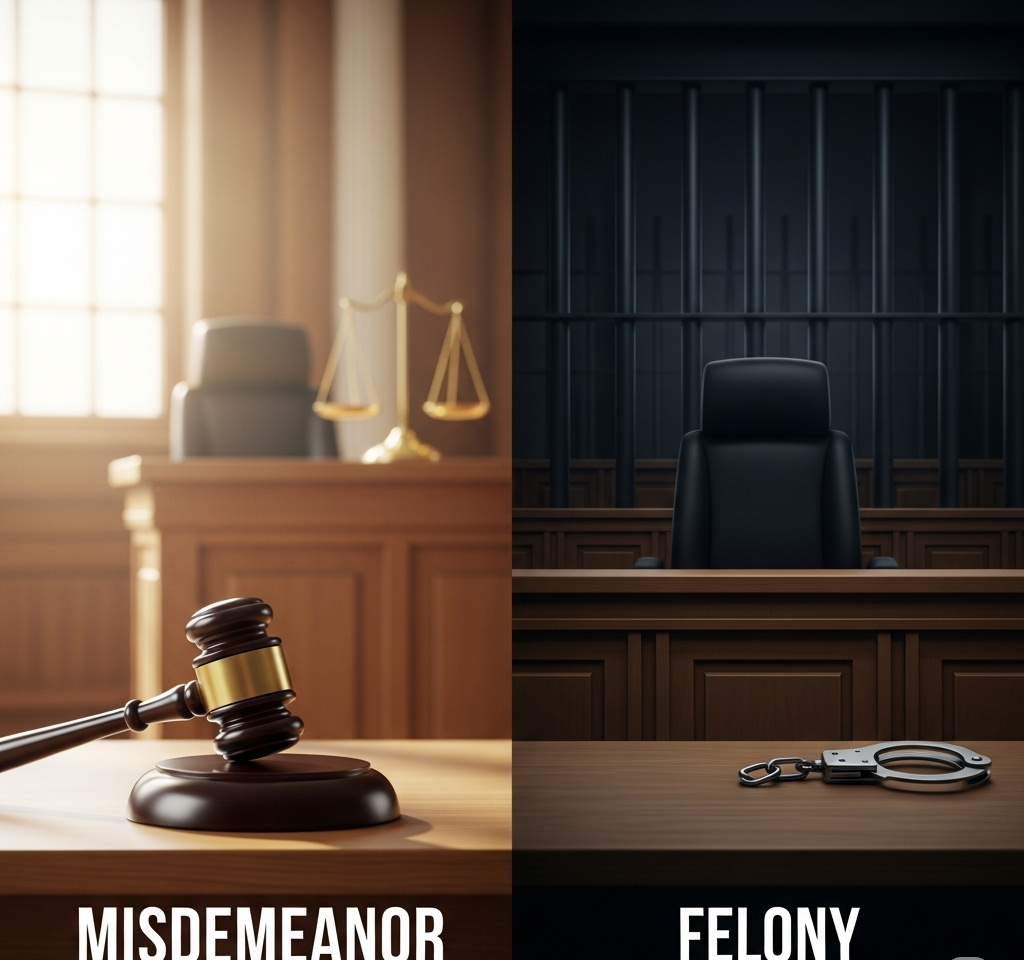
Not all crimes are treated equally under Illinois law. Being charged with a misdemeanor is very different from being charged with a felony — both in terms of the legal process and the potential consequences.
Whether you’ve been charged, know someone who has, or simply want to understand how the system works, this post breaks down the key differences between misdemeanors and felonies in Illinois — in plain English.
What Is a Misdemeanor in Illinois?
A misdemeanor is a less serious criminal offense compared to a felony. That doesn’t mean it isn’t important — it still goes on your record and can come with jail time, fines, and long-term consequences.
Examples of misdemeanors:
- First-time DUI
- Simple assault
- Shoplifting (under a certain dollar amount)
- Disorderly conduct

Penalty range: Up to 1 year in county jail and fines up to $2,500.
What Is a Felony in Illinois?
A felony is a more serious criminal charge with heavier penalties. Felonies can result in prison time, loss of rights (like voting or owning a firearm), and a long-lasting impact on your ability to get a job, housing, or professional licenses.
Examples of felonies:
- Repeat DUIs
- Burglary or robbery
- Drug trafficking
- Gun-related offenses
Penalty range: 1 year to life in state prison, depending on the class of felony.
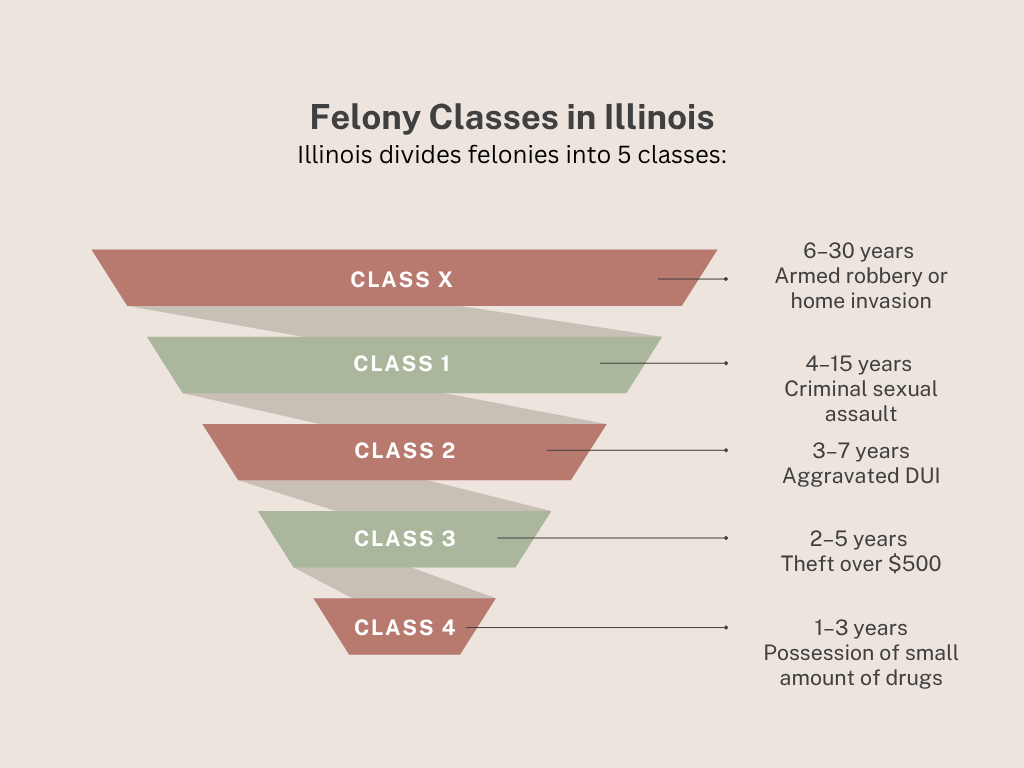
How Charges Are Decided
Whether you’re charged with a misdemeanor or felony depends on:
- The type of offense
- Whether there were injuries or use of weapons
- Past criminal record
- The value involved in property crimes

Do I Need a Lawyer?
Absolutely. Even a minor misdemeanor can affect your future. A criminal defense attorney in Illinois can:
- Help reduce or dismiss charges
- Represent you in court
- Protect your rights
- Negotiate plea deals or alternative sentencing
Know the Difference, Know Your Rights
Understanding whether you’re facing a misdemeanor or felony is crucial — both carry serious consequences. The more you know, the better you can protect your rights and prepare for what comes next. If you or someone you know is facing criminal charges in Illinois, don’t wait — speak to a qualified attorney as soon as possible.